



From science fairs and storytellers to mud kitchen harvests and toad teas, summertime at Gay-Kimball Library has had no shortage of good times, memories, and laughs. As a community, we’ve managed to pull together two fruitful container gardens, a traditional garden, and a pollinator garden. Troy’s kids now confidently know the difference between pollinator-friendly plants and those that aren’t as friendly. They understand why pollinators are important to our local habitat, and so much more. Thanks to our CCCD grant, we have not only been able to implement these gardens but are now using the food from the gardens to help feed people fresh produce.
Whether you don’t feel like driving to Keene, or need fresh vegetables, we put our garden veggies in our front lobby as they are available. They are free for anyone to take with no questions asked! Please do take them as we don’t want them to go to waste, and this is for everyone in the community!
While we are so proud of the gardens and the teamwork they’ve produced, we’re also thrilled at how much reading was done over the summer! Our kids and adults did a great job with summer reading once again this year. Congratulations to all who participated!
Here is a look at just a few of our summer reading stats as of August 4:
-CHILDREN’S SUMMER READING STATS-
Total children who participated: 44 children
Total books read: 1,959 books
Main age that occurs (Mode): 9 years old (appears 7 times)
Highest goal: 200 books (set by Addison Morash)
Lowest goal: 4 books (set by James Dewing-Baird)
Highest number of books read: 159 books (tied between Abigail, James, and Joseph MacDonald)
-ADULT SUMMER READING STATS-
• Total participants: 19 people
• Total books read: 84 books
• Highest goal: 20 books (tied between Tara Chasse and Kathy Stanton)
• Lowest goal: 3 books (tied between Crystal Lerio and Kristen Tilton)
• Highest number of books read: 15 books (tied between Hailey Dewing-Baird and Tara Chasse)
TOTAL BOOKS READ
· Total participants: 63 people (44 children + 19 adults/older participants)
· Total books read: 2,043 books (1,959 from chart one + 84 from chart two)
· Highest goal: 200 books (Set by Addison Morash in chart one)
· Lowest goal: 3 books (Set by Crystal Lerio and Kristen Tilton in chart two)
· Highest number of books read: 159 books (Tied between Abigail, James, and Joseph MacDonald)
Now, with school back in session and the leaves ready to change color, we’re looking forward to fall programming. By request, we are bringing back our Cook the Book program! We will be cooking recipes from Garden to Table Cookbook by Kayla Butts. If you are interested in selecting a recipe to prepare and share with the group, please stop by the library to sign up! We picked this book as part of our Plant a Seed: Read and Farm to Table themes at the library this year. We’re hoping to use ingredients from our very own vegetable gardens as part of the recipes! Call or stop by the library to learn more about our plan for Cook the Book – Family-friendly Farm to Table edition!
I will be heading to Montgomery, Alabama this month to attend and present at a national conference for the Association for Rural and Small Libraries. Not only will this be a great opportunity to put our special town on the map and show off the hard work we’ve done with our gardens, but it will mean the ability to network with librarians and library staff from all over the country.
I will be hosting a national workshop on creating safe spaces in libraries that will serve as a model for other libraries around the country. I also hope to bring back new ideas and resources to Troy, as well as provide resources that go beyond books in small towns like ours to others. Please bear with our staff and hours during the week of September 14 through 20th as we will do our best to serve you but may need to move to limited hours while I am away.
Author Peter M. Hanrahan will be joining us at the Gay-Kimball Library at noon on Saturday, September 26, and will be making a presentation regarding his book, Dean Man’s Ridge: The Bravery of American Paratroopers at the Battle of the Bulge.
The principal character in the book, Niilo Liimatainen grew up in the Troy area and, after World War II, made the Monadnock Region his home until his passing in 2005. Following his presentation, Mr. Hanrahan will also hold a question-and-answer session and will then be available to sign books for attendees. Author and Filmmaker Dayton Duncan worked for 32 years in partnership with Ken Burns to produce historical documentaries for PBS. After reading the manuscript, Mr. Duncan provided the following advance praise for the book.
“Peter M. Hanrahan talked for hours with his wife’s uncle about the old veteran’s experience in World War II, when his untested platoon was virtually wiped out in the Battle of the Bulge. This led Hanrahan on a deeper search for other personal accounts of soldiers from the 17th Airborne Division, whose first action came in that bloody and decisive campaign. And what a treasure trove he discovered. Through their letters and reminiscences, Dead Man’s Ridge brings the reader to the bitterly cold days in Belgium when young American men were introduced to the horrors and heroism, the chaos and camaraderie of desperate combat against a seasoned enemy. Day-by-day accounts of major figures, from Patton to Eisenhower and even Hitler, provide the larger context of the epic battle, but it is the granular testimony of the men who did the fighting and dying that gives this book its power–– and its heart.”
Also on September 26, I will be joining the Troy Conservation Commission at the ballfield on Marlborough Road for a moon stargazing event at around six (more specific times to follow). We’ll read about the harvest moon and make a craft before dark. For more details on this event, keep your eyes on our Facebook page and website.
Moving forward, many are asking if we will be holding a Trunk or Treat again this year. The answer is “yes.” With that said, we are in need of candy donations as soon as possible. Last year, we had well over 300 visitors to our Trunk or Treat and we want to be sure we don’t run out of candy! If you want to help out, but don’t want to host a trunk, please consider donating candy to the library any time during September and October. We use this candy to help out those who do volunteer trunks! Anyone interested in hosting a trunk can sign up by calling the library to reserve a spot!
Upcoming October events:
• October 8 at 5 pm – Judith Black Program – Humanities-to-Go through NH Humanities: Meet Lucy Stone: Enter the Antebellum World of the Abolition and Women’s Rights Movements
In this first-person interpretive program, Judith Black introduces American Lucy Stone, the first woman hired by the Massachusetts Anti-Slavery Society as a public speaker and the “Shining Star” of the Abolition and Women’s Rights Movements. The presenter dispels well-worn platitudes about the antebellum North by interjecting historic and personal truths about these social reform movements. Her presentation also paints a dynamic and detailed picture of what it takes to change the world you are born into. Follow Lucy as she makes her case for tax resistance, her challenges to marriage laws and motherhood, and her pro-Emancipation response to the Civil War. Go with her to The American Equal Rights Association Convention in May 1869, where she eloquently supports the 15th Amendment, which gave African-American men the vote.
• October 15 at 4 pm – Jabberwocky Tea with Miss MaryLee!
This event will include a snack and craft and is open to all ages. “Jabberwocky” is a famous nonsense poem by Lewis Carroll featuring a classic heroic quest, a triumph of good over evil, and a playful subversion of language. Published in his 1871 novel Through the Looking-Glass, it tells the story of a young boy who listens to his father’s warning, takes his sword, hunts and kills a scary monster called the Jabberwock, and returns home victorious. MaryLee has it memorized!
• Trunk or Treat – Held in the Gay-Kimball Library parking lot during Trick or Treat hours for Troy.
We are currently working on scheduling more events for the remainder of 2026. Follow our Facebook page to learn more and stay up to date with GKL activities and programming. Our goal is to continue to do what we can to make the library a welcoming, helpful place in town as we grow.




Weeks Four and Five
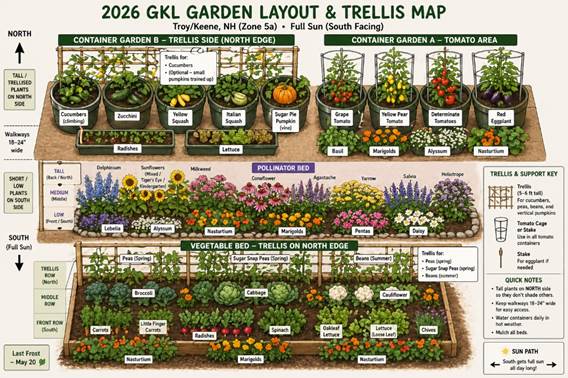
May 1 – We pulled out our best graphic design and AI skills to create a visual map of our gardens so we could best prepare our garden designs. We cross-referenced with Burpee guides to be sure that whatever we plant will work well with its neighbors.
May 7 – Library Director Erin George asked the local Girl Scouts to create plant markers for our gardens and made plans with the library landscaper to put in the final garden bed in preparation for an end-of-the-month planting/ground-breaking!
May 8-10 – Research was done by several patrons and volunteers on fencing and other tools/things that would be needed for our gardens, like hoses, etc. Erin also researched the cost of plugs, bulbs, and plants that are already established versus seedlings already started in the conference room. Meanwhile, library children continued to keep an eye on seedlings to be sure they were watered and turned to and away from the sun as needed.
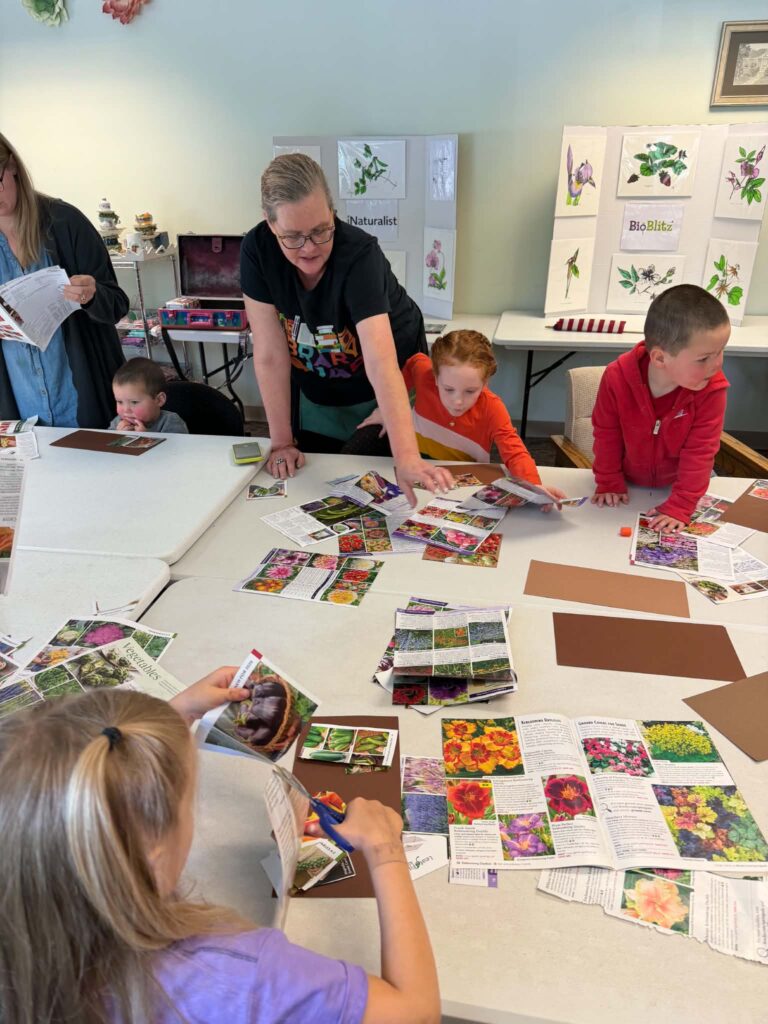
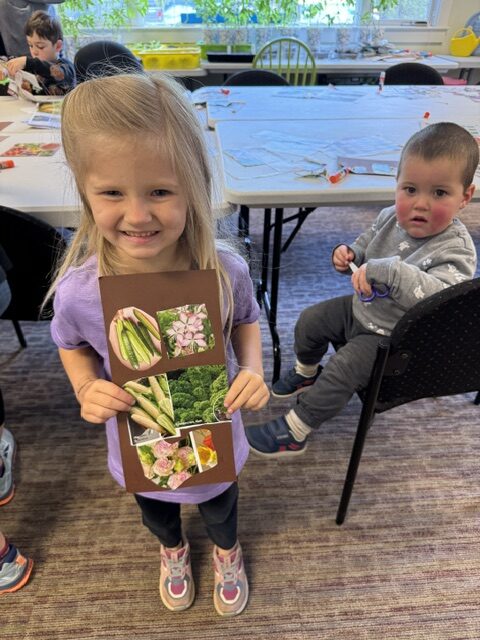
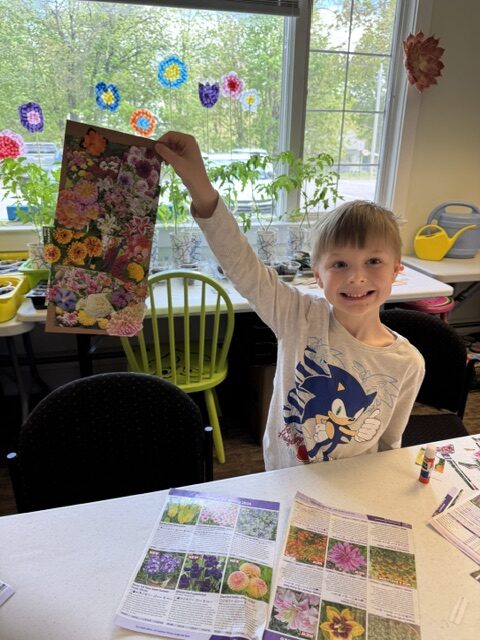
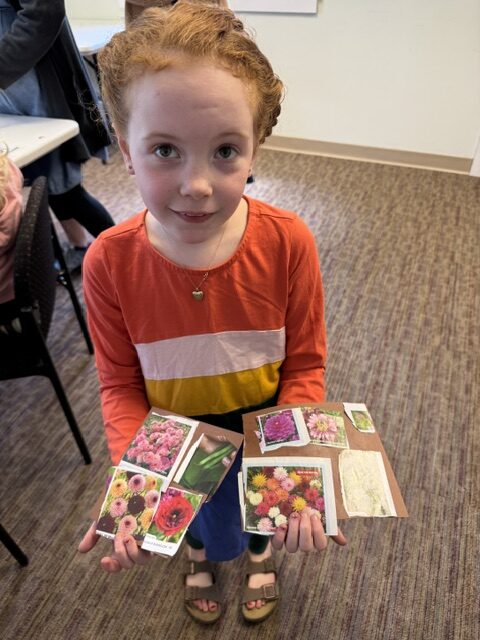
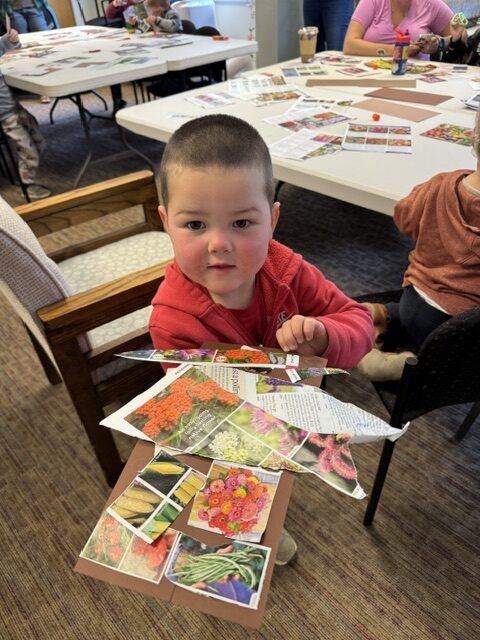
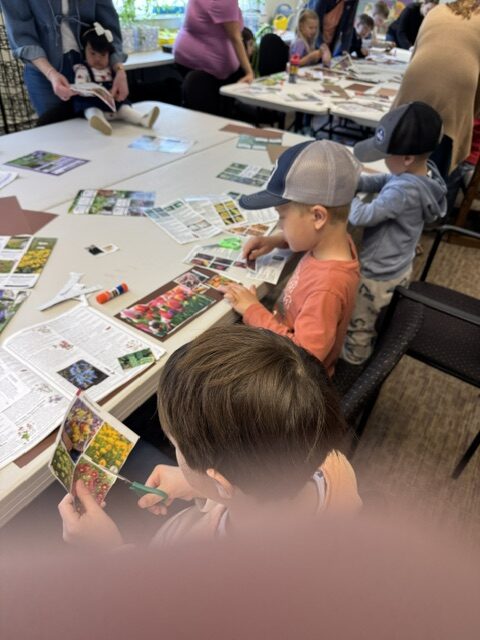
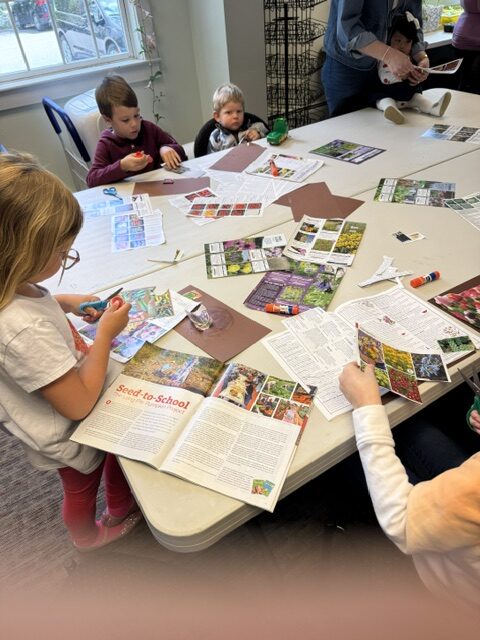
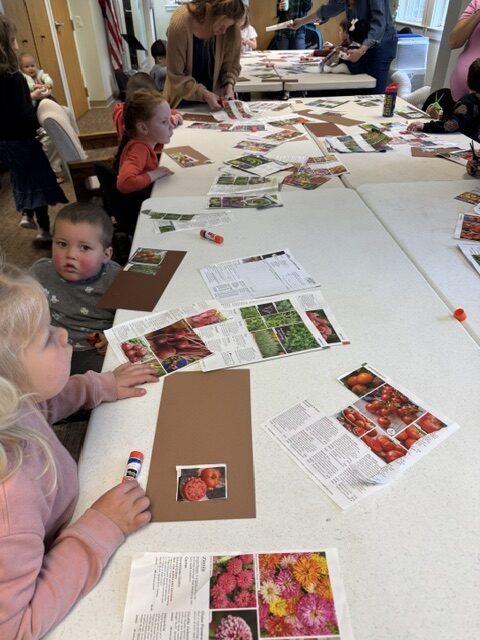
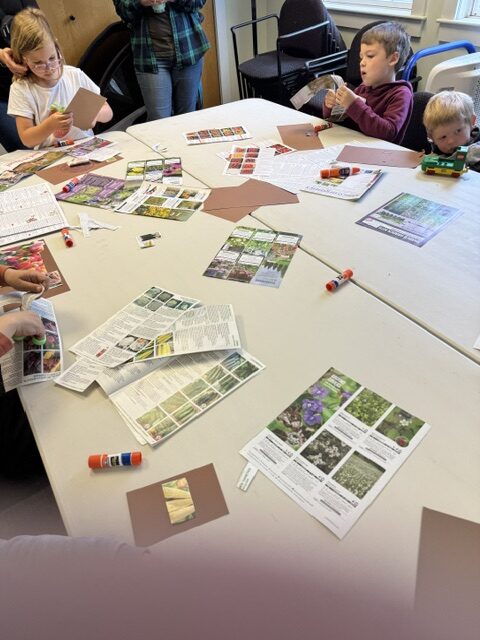
May 13 – Gay-Kimball kids had a blast planning gardens using seed catalogues and creating gardens all their own, learning more about the differences between pollinator gardens and other types of gardens.
Week Two
April 17 – A regular patron volunteer removed the rocks from our cardboard and spread compost over it so that the cardboard could begin the process of decomposition. We will soon add a layer of mulch to complete the prep for our pollinator garden for now.
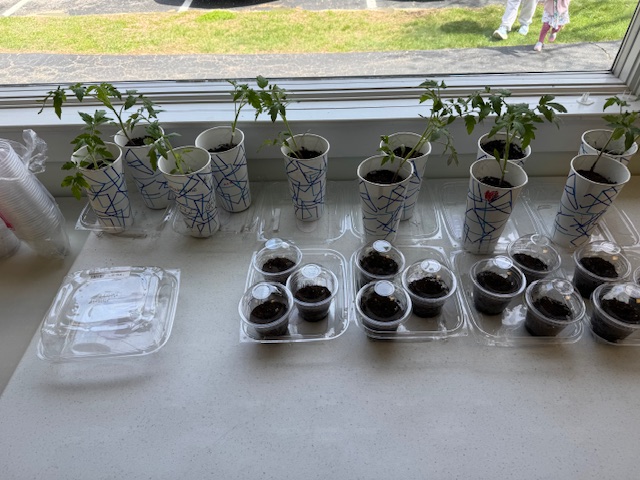
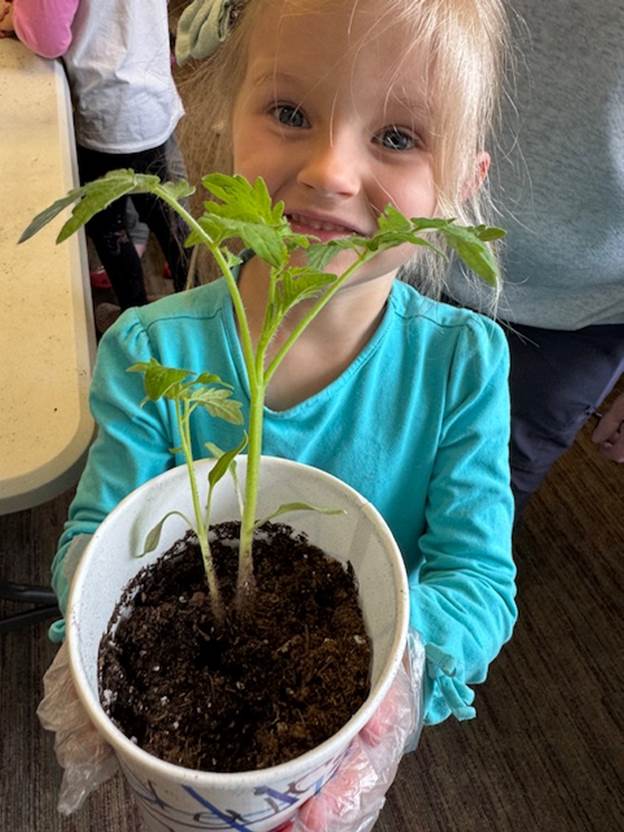
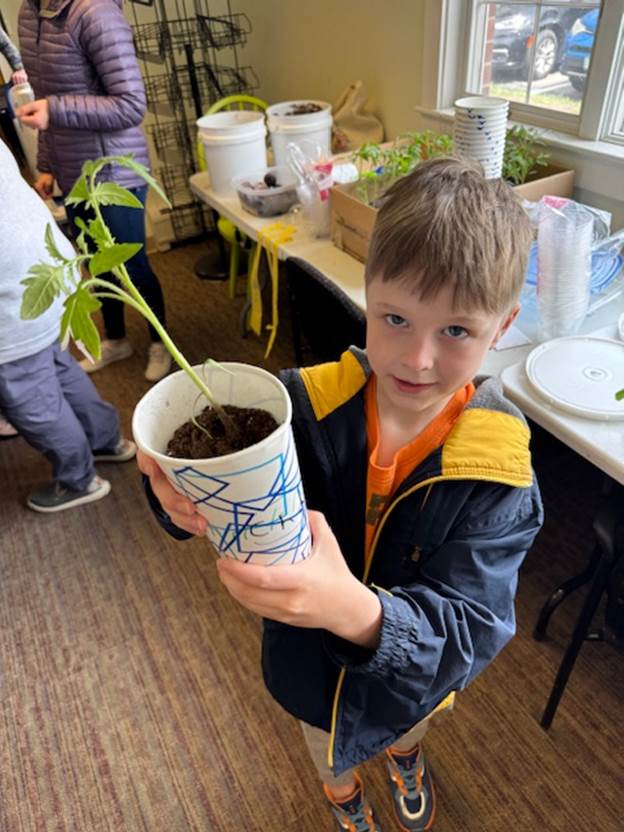
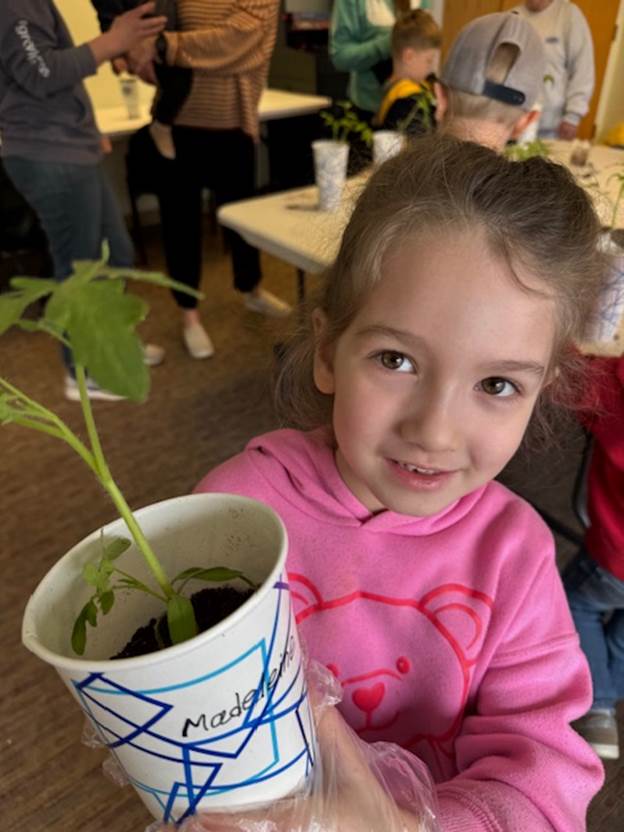
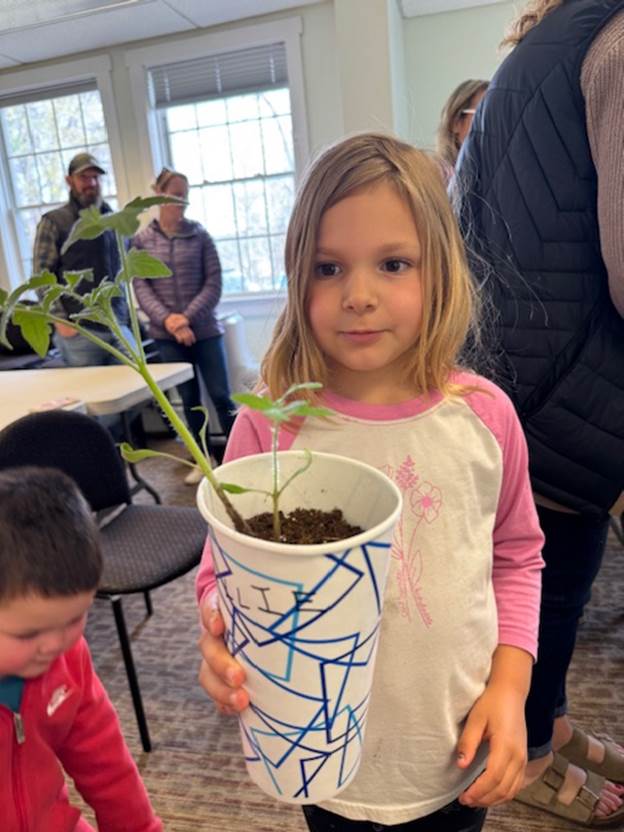
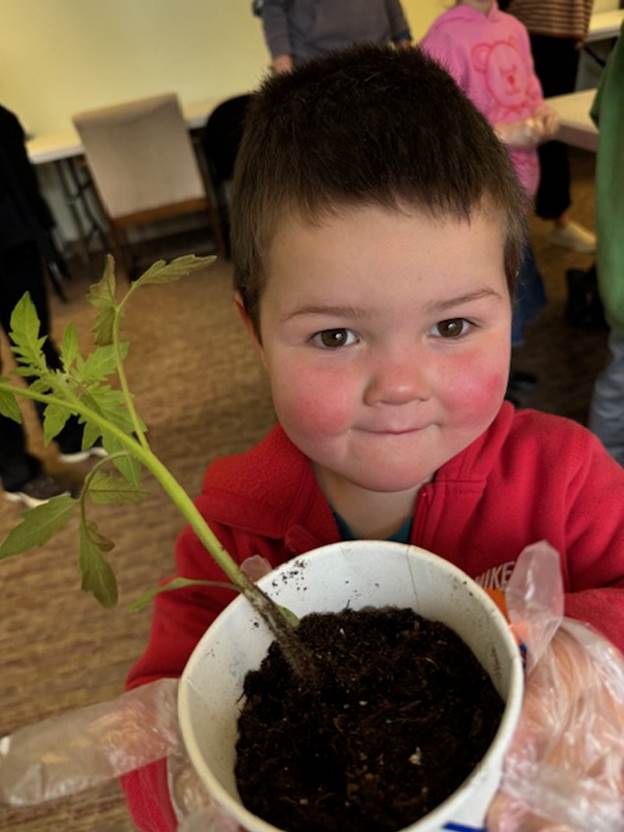
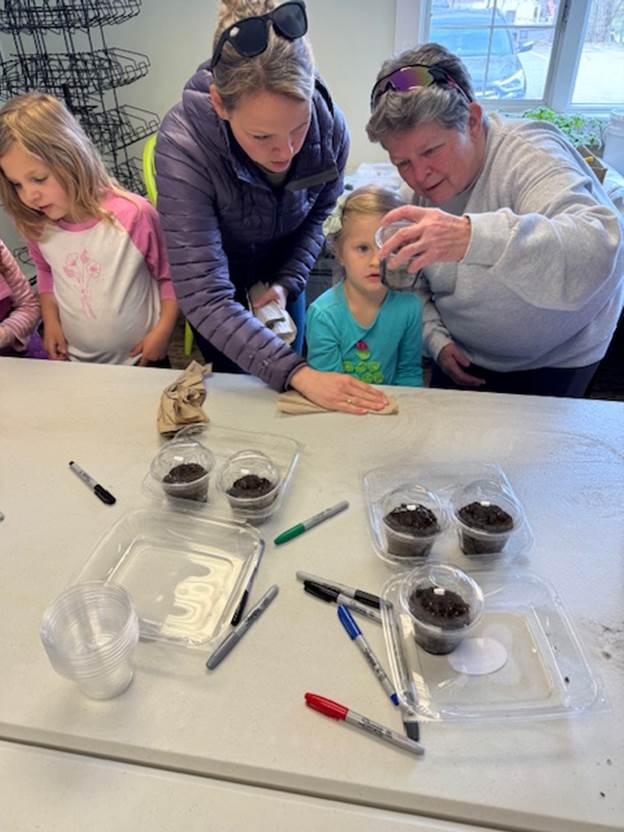
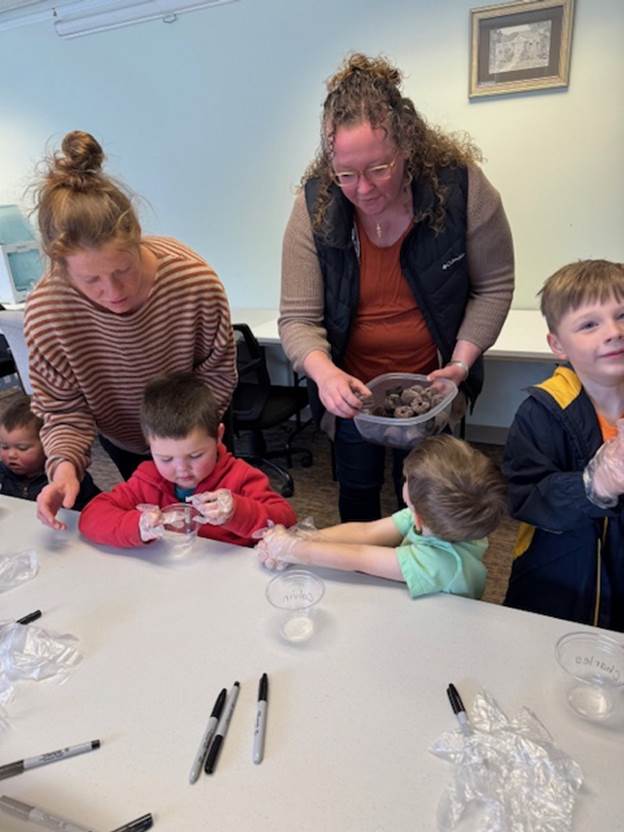
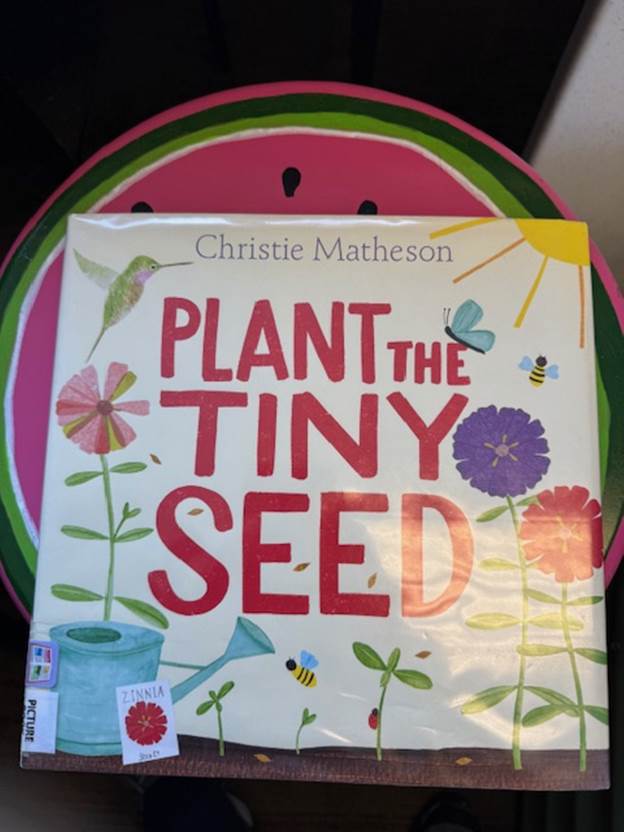
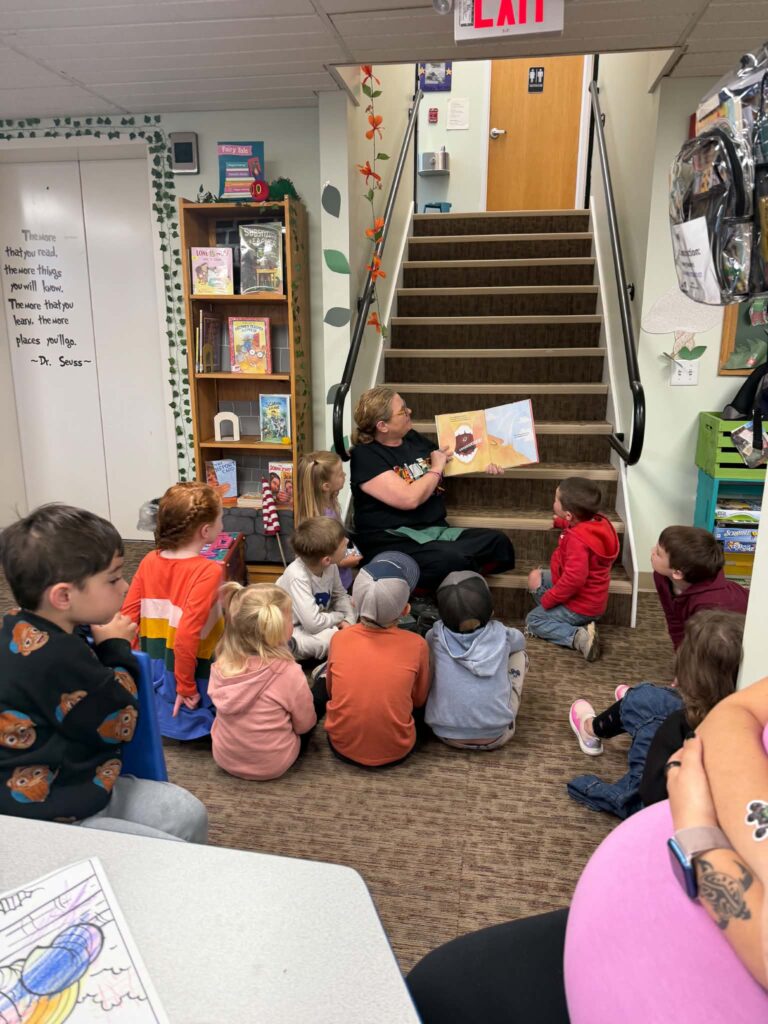
April 21 – Just in time for Earth Day, we held a special Storytime by inviting a special guest in to help us get seeds started for the gardens. Ruth, known to the library kids as “Nans” or “Nana,” came in to teach the kids about seeds. The kids planted sunflowers and transplanted tomatoes. These plants will continue to grow in pods in the library conference room over the next few weeks, and the children will take care of them during weekly Storytimes. The Girl Scouts, in the meantime, will also look after them. Nana left seeds, pods, potting soil, and more for other age groups to plant throughout the week, and librarians designated several tables in the conference room as spaces for our makeshift “greenhouse.”
April 22 – We had a teen volunteer come in to help us plant seeds in starter pods in our conference room for the following for our veggie garden: cauliflower, lettuce, eggplant, and peas! We were also able to help a patron with tomatoes she’d lost in an early frost by replacing them with our own starter tomatoes from the Storytime group; what community gardening is all about!
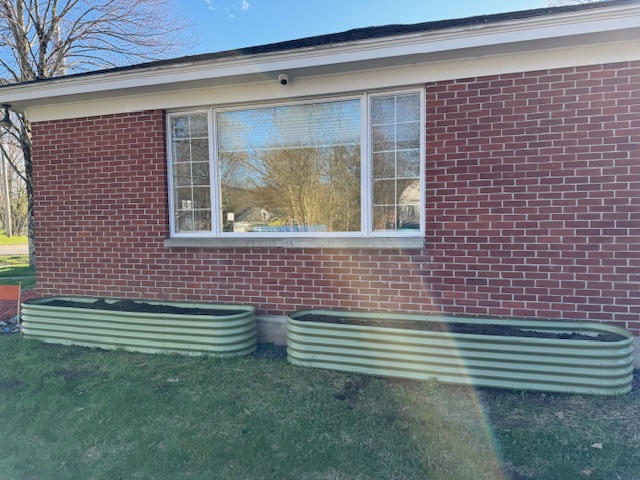
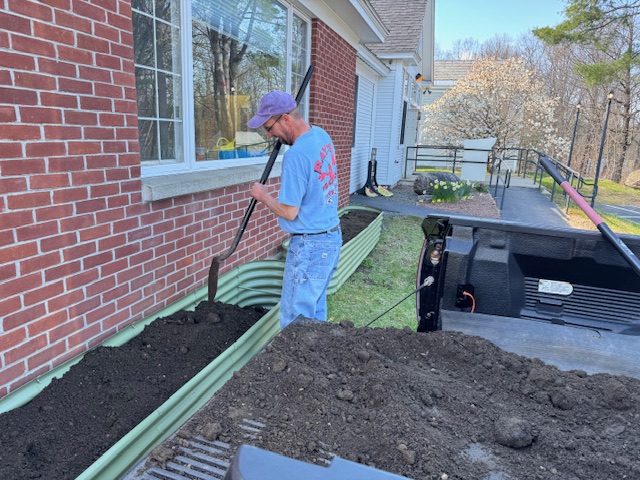
April 23 – We moved the two ten-foot container gardens outside and lined the back of the building with them. We filled the bottoms with cardboard and mulch and brought in two truckloads of soil to fill them.

Week Three
This week was all about planting more seedlings, keeping them watered, and the research. While we continued our learning in programming with books like “The Bad Seed” and “Growing Together,” we also looked toward tools like “Burpee Companion Guide” to plan our garden designs. We learned that some plants are poisonous to one another, while others complement each other, and came up with the following plans for our gardens:
Container Garden A
Container Garden B
Pollinator Bed
Vegetable Bed